Gale Antokal
Biography:
Gale Antokal was born in New York, New York, and received her BFA (1980) and MFA from the California College of the Arts in 1984. She is a Professor Emeritus at San Jose State University in the Department of Art and Art History.
Antokal held several visiting artist positions and teaching positions including the San Francisco Art Institute, Instructor of Art History at the Lehrhaus Institute, and the American College in Jerusalem. She was an affiliate faculty member in the JSSItaly program in Civita Castellana, Italy in 2015. In 1992 Antokal received a Visual Arts Fellowship from the National Endowment for the Arts. She is represented by Chandler Gallery in Mill Valley, CA, Donna Seager Fine Arts in San Rafael, and Amy Simon Fine Arts in Westport Connecticut. Her work is included in public, private and international collections.
Statement:
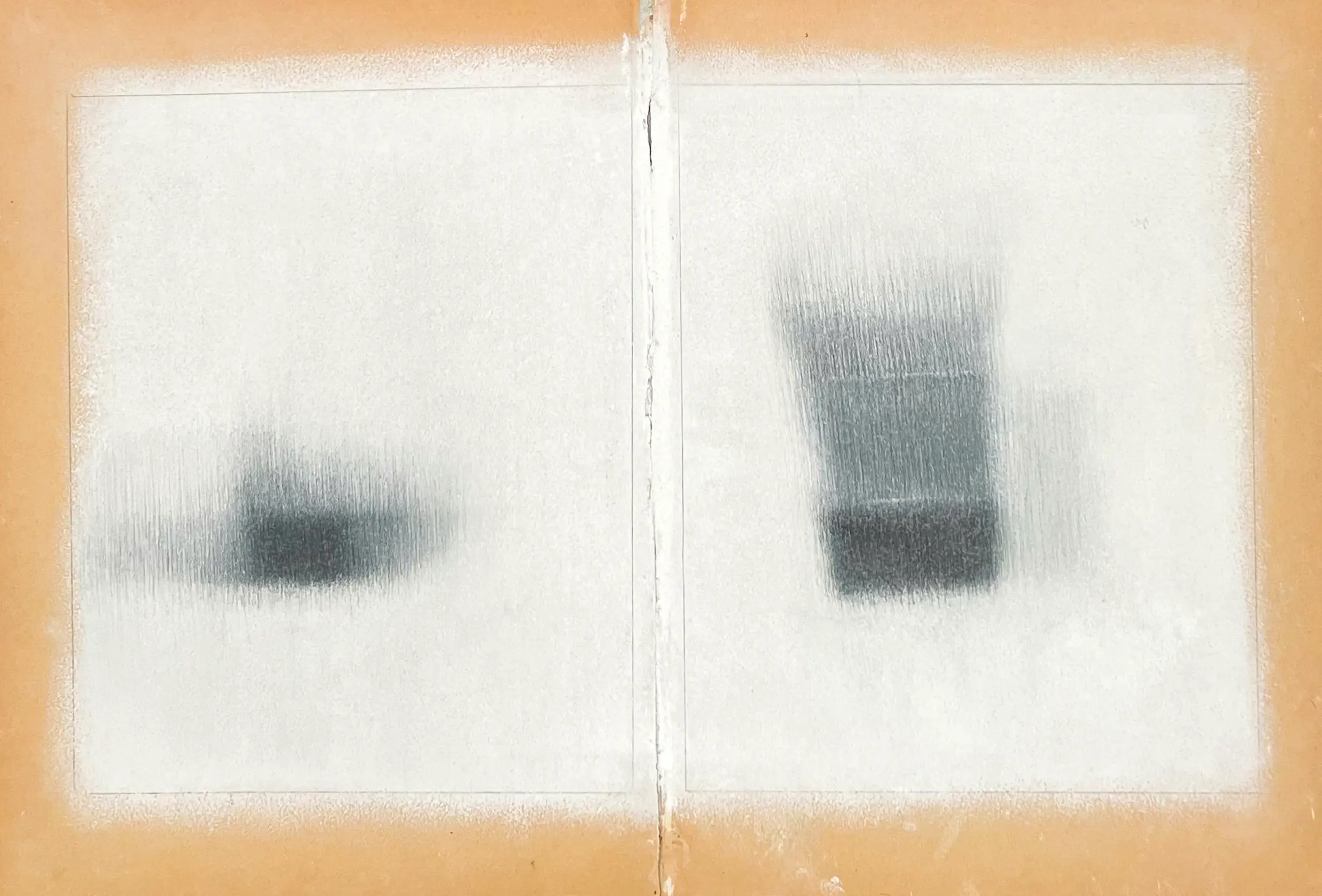
I am continually drawn back to a recurring theme in my work: the use of dust—white chalk, flour, graphite powder, and ash. These materials persist beyond any fixed period or subject matter. What has recently emerged is not historical narrative, as in earlier work, but the essence of the materials themselves—their being, matter, and presence in small abstract forms rendered with realistic precision.
These drawings are made with mixtures of chalk, graphite, flour, and ash, often applied with my index finger. Within my personal iconography, ash marks the finite end of all material, while flour suggests sustenance. Both exist as light, dry dusts, vulnerable to the slightest movement of air. Their instability becomes a metaphor for the human condition—briefly held, always on the verge of dispersal.
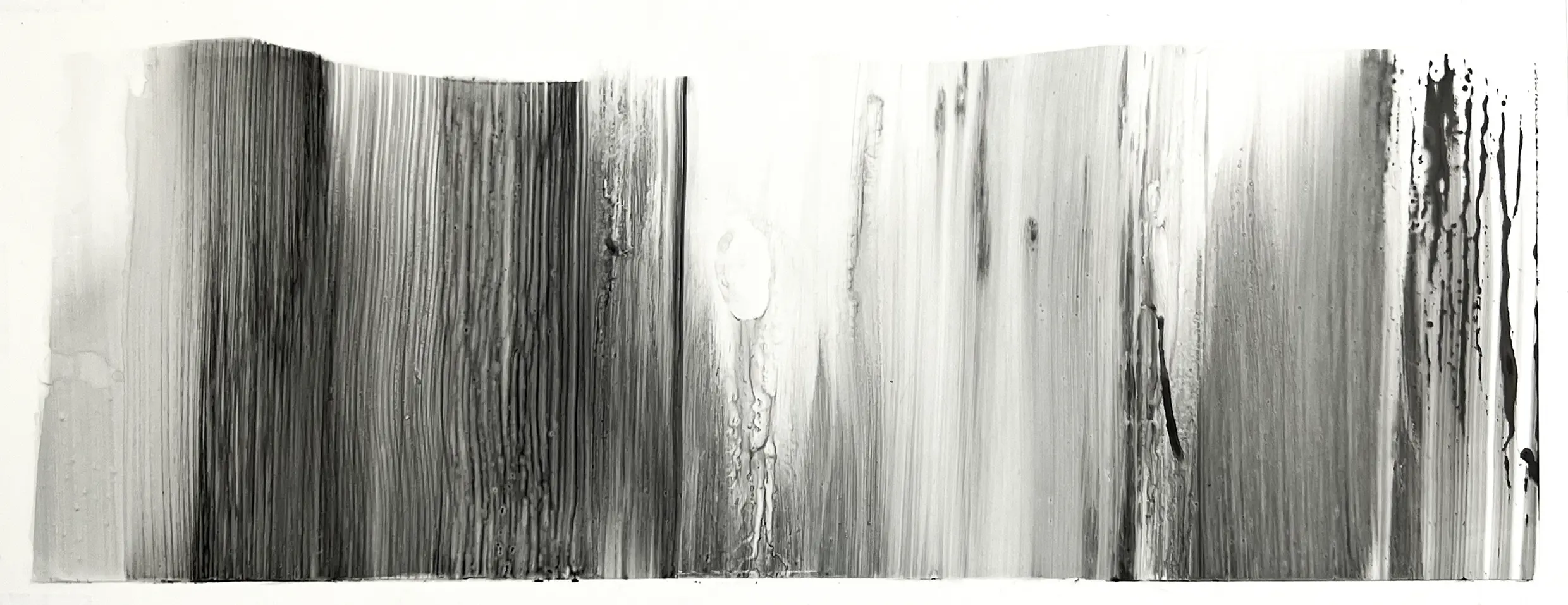
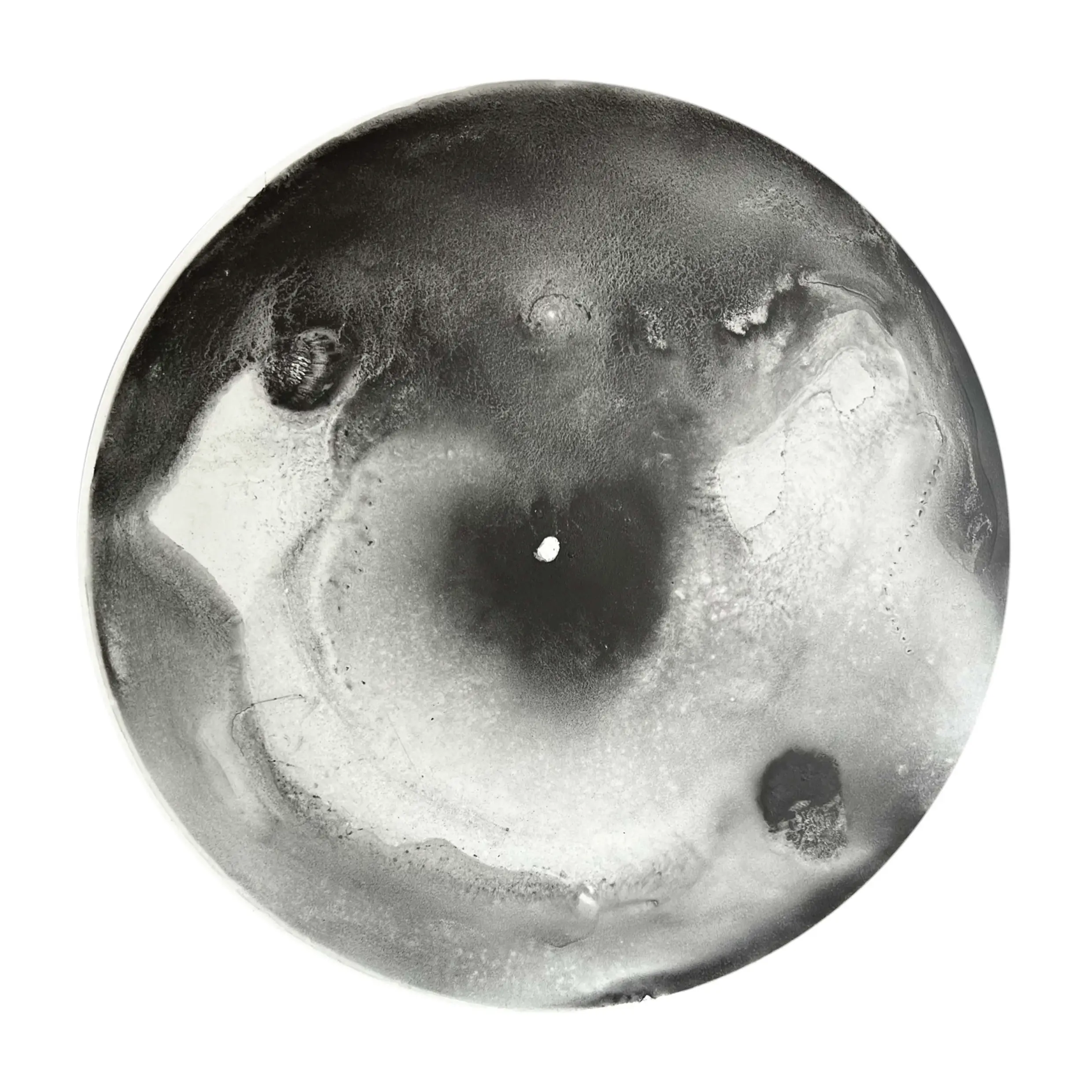
In parallel, I work with graphite wash on opaque white synthetic paper. These paintings begin with broad upward brushstrokes whose feathery edges become arenas of counterpoint: downward rushes, shifting undulations, and crisp sponged interruptions. The surface resists and reasserts itself, returning insistently to white and introducing an element of risk. Recently, the work has centered around a single point, with washes circulating outward from it. If the dust drawings hold matter in suspension, the washes enact its undoing. One gathers; the other releases. One clings to the surface by the lightest touch; the other tests the limits of adhesion, receding into the white from which it came.
Both operate within a narrow margin between appearance and erasure, form and dissolution. Nothing is fixed. The smallest disturbance—a breath, a shift of pressure, an excess of water—can undo what has been made. Yet within that instability, a particular clarity emerges, existing precisely at the edge of loss.
Artist's Collection